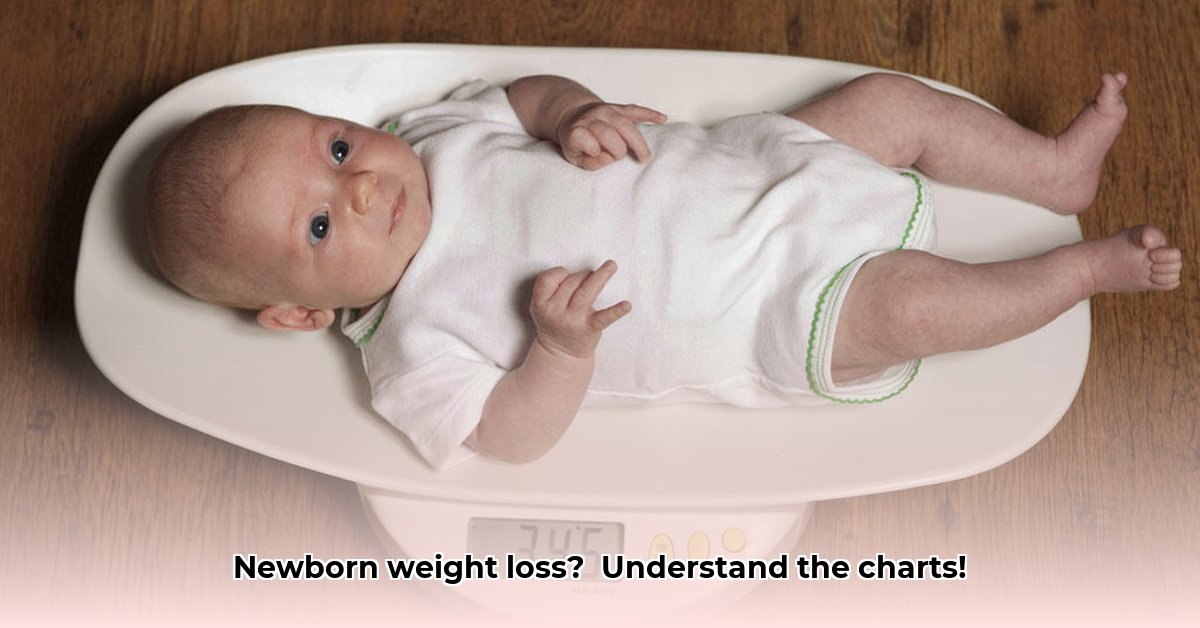
Newborn weight fluctuations can cause significant anxiety for parents and healthcare providers. This guide provides a comprehensive understanding of the Newt tool, a valuable resource designed to assist in monitoring newborn weight and facilitating early intervention.
How Newt Works: A Step-by-Step Guide
Newt leverages a vast dataset of newborn weight information to provide personalized growth assessments. Unlike traditional growth charts, Newt considers factors such as gestational age (weeks pregnant at birth) for a more accurate analysis.
Step 1: Data Input: Begin by entering your baby's birth weight and gestational age into the Newt system. Subsequently, record your baby's daily or near-daily weight. Accuracy is paramount; the more precise the data, the more reliable the results.
Step 2: Algorithmic Comparison: Newt's sophisticated algorithm compares your baby's weight to a large database of newborns with similar characteristics. This allows for a personalized assessment rather than broad population averages.
Step 3: Visual Representation: Newt presents the data visually, typically as a chart or graph, illustrating your baby's weight trend over time. This visual representation makes it simple to understand your baby's weight progression.
Step 4: Intelligent Alerts: Newt may generate alerts if your baby's weight falls outside the expected range. These alerts are intended to prompt communication with your pediatrician, not to induce alarm. They serve as a flag for potential discussion, not a diagnosis.
Understanding Newt's Results: Interpreting the Visuals
Newt's visual representation simplifies understanding your baby's weight trajectory. The system shows your baby's weight plotted against percentile ranges, offering a clear picture of their progress.
Normal Weight Loss/Gain: The weight trend falls within the expected percentile range, indicated by a line within a shaded "normal" zone on the graph. This suggests your baby's weight is developing as expected.
Concerning Weight Loss: The weight trend falls below the expected percentile range, prompting an alert. While not inherently alarming, this warrants discussion with your pediatrician to investigate potential underlying causes.
Excessive Weight Gain: The weight trend significantly exceeds the expected percentile range, also triggering an alert. Similar to weight loss, this requires consultation with your pediatrician to rule out any underlying issues.
Newt's Limitations and Considerations
While Newt offers valuable support, remember its limitations:
Data Dependency: The accuracy of Newt's analysis directly relies on the quality and accuracy of the data input. Inaccurate data may lead to misinterpretations.
Dataset Representativeness: Newt's database, while extensive, might not perfectly represent the diversity of the entire population. Future expansion of the database will improve representativeness.
Supplementary Tool: Newt is a supportive tool for monitoring, not a replacement for professional medical advice. Always consult your pediatrician for diagnosis and treatment.
Individual Factors: Factors such as ethnicity, feeding type (breastfeeding vs. formula), and pre-existing health conditions can influence a baby's weight and may not be fully accounted for in the current model.
Integrating Newt into Your Routine
Newt simplifies weight monitoring for both parents and healthcare providers. For parents, it provides a convenient tracking mechanism and facilitates more informed conversations with pediatricians. For healthcare professionals, it offers standardized observation of weight trends, aiding in early intervention.
Risk Mitigation: Data Security and Accuracy
Newt prioritizes data security and accuracy. Robust security measures protect patient privacy, while ongoing algorithm refinement and database expansion enhance accuracy and reliability.
Actionable Steps for Different Stakeholders
Healthcare Providers: Integrate Newt into clinical workflows, gather feedback to refine guidelines, and conduct research to validate its effectiveness.
Parents: Learn to accurately use Newt, track your baby's weight diligently, and engage openly with your pediatrician regarding alert triggers.
Developers: Continue addressing user feedback, expanding the database's diversity and scope, and developing features for enhanced personalization.
Regulators: Assess Newt's safety and efficacy for official approval and monitor its compliance with data privacy regulations.
Conclusion
Newt serves as a valuable supplementary tool promoting early intervention in newborn weight management. By facilitating communication between parents and pediatricians, Newt contributes to better health outcomes for newborns. However, its effectiveness depends on accurate data input and integration within a comprehensive healthcare approach. It is crucial to remember that Newt enhances, but never replaces, professional medical advice.